The Three-Meal Plan That Leaves Room for Change
A flexible three-meal plan helps you share ingredients across dinners, use leftovers deliberately and adjust when your appetite or schedule changes.
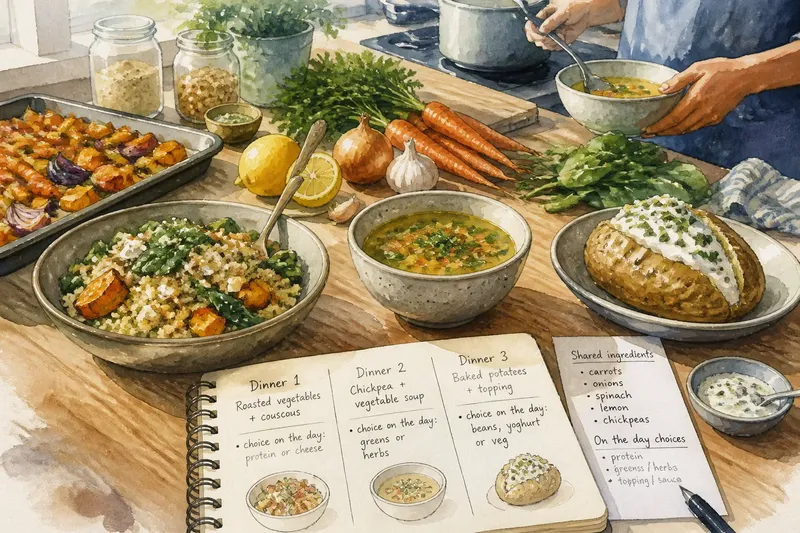
The common mistake with a three-meal plan is tying every ingredient to one exact recipe, then feeling stuck when an evening changes. Choose three dinners that share a few ingredients, but leave a practical choice open in each one. You’ll have a useful shopping guide without turning the week into a rigid schedule.
What should a three-meal plan include?
Treat the meals as options, not appointments. Give each one a dependable base—such as rice, potatoes, pasta, bread or couscous—and choose a few ingredients that can work across more than one dinner. Leave the finishing touches until you know what sounds appealing and what needs using.
A simple combination might be roasted vegetables with couscous, chickpea and vegetable soup, and baked potatoes with a topping. Carrots and onions could suit all three, while herbs, greens or sauce give each meal its own character. Three is a planning anchor, not a rule about how often you must cook: one dish might provide several portions, or another evening might call for something ready-made.
How do you choose ingredients for three meals?
Start with foods that have more than one likely use. Spinach could go into soup, sit beside a warm grain bowl or be folded into an omelette. A lemon might brighten a dressing or a cooked vegetable dish. These choices are easier to use up than an ingredient bought for one elaborate recipe.
Before shopping, check the fridge and cupboards, then separate your notes into two groups:
- Shared ingredients: If onions, carrots or plain yoghurt suit at least two meals, note the dishes they can join and buy only what your plan needs; if they have no clear second use, choose a more versatile ingredient or leave them off the list.
- Meal-specific ingredients: If a sauce, herb or filling gives one dinner its distinct flavour, keep it on that meal’s list; if it is hard to use elsewhere, choose a smaller or more practical alternative.
- Food already at home: If cooked rice or an opened tub of yoghurt is in suitable condition, plan a meal that uses it; if its safety or condition is uncertain, don’t build the plan around it.
Sharing ingredients needn’t mean repeating the same flavour. Roast carrots for one dinner and simmer them in soup for another; add herbs or a sharp dressing where they fit. It isn’t worth tracking every spoonful of seasoning or garnish. Keep notes for choices that affect shopping, meal variety or the timely use of perishable food.
What can you decide on the day?
Leave one part of each dinner open. Instead of writing “grain bowl with roasted vegetables, egg and yoghurt sauce”, plan “grain bowl with vegetables and a protein”. On the day, choose from realistic options already available, such as beans, a fried egg or leftover vegetables.
For instance, imagine you have planned roasted vegetables, soup and baked potatoes, but a late meeting makes cooking the vegetables feel like too much. If they are already cooked and stored safely, use them in a grain bowl and move the soup to another evening. The food still has a planned use, while the order changes to suit the evening.
How can leftovers fit without controlling the week?
Give leftovers possible destinations, not fixed assignments. A little soup might become lunch, while roasted vegetables could top toast or fill a wrap. If the amount differs from what you expected, keep the next meal simple: add bread or salad to a small portion, or serve a larger portion as dinner and choose another meal later.
If you intend to keep a portion, set it aside before serving when that helps with safe handling. Use suitable containers and follow the food’s label or relevant food-safety guidance for cooling, refrigeration and use. If you’re unsure whether it is safe to eat, discard it rather than letting the plan make the decision for you.
What questions come up when plans change?
What if I miss one of the planned meals?
Move it to another day only if its ingredients will still be suitable and you still want it. Otherwise, use them in another meal or revise the plan.
How can I avoid eating the same thing repeatedly?
Share ingredients rather than whole recipes: change the base, cooking method or seasoning. Couscous with roasted vegetables and vegetable soup can use some of the same produce but offer different textures.
Should I plan lunches as well?
Only if it helps your routine. You can note that dinner leftovers may be available without relying on a portion that might not remain.
Which meal is easiest to leave flexible?
Choose one with a simple base, such as toast, potatoes, rice or pasta, and a topping that can vary. That gives you a starting point without fixing every combination.
How should you use the three-meal plan?
Write down three dinners, the ingredients that serve more than one, and one choice to make on the day. That is enough detail to guide shopping without asking the rest of the week to follow a script. A three-meal plan is most useful when it helps you choose what to buy and cook, while leaving appetite and schedule to shape the final plate.