Canned, Frozen or Dried Beans: Choosing a Format for the Meal
Compare canned, frozen and dried beans by preparation, texture and meal timing, so you can choose a format that fits tonight’s dish without unwanted extra work.
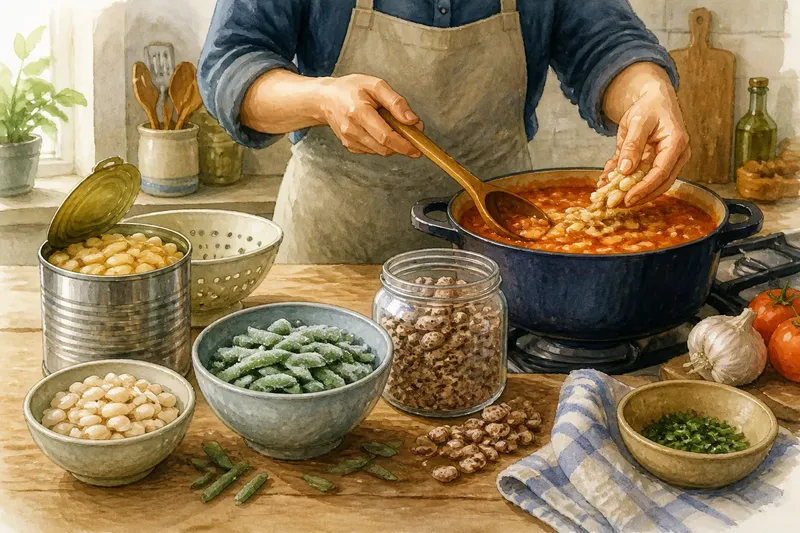
The common mistake with canned, frozen or dried beans is choosing by habit, then discovering the format does not suit the meal or the time available. A tin can go into a quick supper, frozen beans need heating as directed, and dried beans require planning and cooking. Choose for the dish in front of you, and you are less likely to delay dinner or end up with beans softer than you wanted.
What does the dish need from its beans?
Start with the finished dish. Should the beans hold their shape, blend into a thick sauce, or simply add substance? Then consider how much time you have and whether you can prepare them ahead.
For a salad, intact beans are easier to toss gently. In soup or stew, softer beans can be welcome; you can mash a few into the broth to give it body. For a quick side, the main question may be whether you need to soak or cook anything at all.
Texture varies with bean variety, processing and cooking. If the dish is delicate, check the beans before mixing them in and handle them gently.
How do canned, frozen and dried beans compare?
- Canned beans: Already cooked and useful when the meal is happening now. Drain and rinse if you want to remove much of the packing liquid; keep some if its flavour suits the recipe.
- Frozen beans: Convenient to use in portions and often packed without liquid. Their texture depends on the bean and how it is heated, so follow the packet directions and check tenderness as you cook.
- Dried beans: Need preparation and cooking before they are ready to eat. They suit cooks who can plan ahead and want to choose how tender the beans become.
Check the label for bean variety, ingredients and preparation directions. For canned beans, consider whether salt or flavourings in the packing liquid suit your dish.
Which format fits your schedule?
If you are cooking now, canned beans are often the simplest option: drain or rinse as needed, then add them to the dish to warm through. Frozen beans can also suit a quick meal, but check their packet for the recommended preparation. Dried beans need time for any soaking or other preparation, followed by cooking.
Dried beans are easier to use when you plan ahead. Cook them when you have time and keep them for a later meal, following the recipe or product guidance for preparation and storage. If you have not started and dinner is nearly ready, choose canned or frozen beans rather than trying to rush dried ones.
Say you have a tomato and bean stew planned after work, with no beans prepared. You check the cupboard and find a tin of cannellini beans and a bag of frozen green beans. Since you want a quick, thick stew, you add the drained cannellini beans near the end and mash a few into the sauce; the result should be warm beans and a broth with more body. If you instead want distinct, firmer pieces, you could use the frozen beans, following the packet directions and checking their texture before serving.
How should you match texture to the recipe?
Canned beans are already cooked, so they generally need warming rather than extended cooking. Add them later to soup or stew if you want them to stay distinct. For a creamier result, mash a few into the liquid.
For frozen beans, follow the packet directions and taste one before adding delicate ingredients. Stop heating when they suit the dish; if they are still too firm, continue gently and check again.
With dried beans, use the recipe or product directions for preparation and cooking, then check tenderness as you go. Acidic ingredients such as tomatoes or vinegar can affect softening, but the effect depends on the recipe and cooking conditions. Follow the recipe’s timing rather than making a general timing adjustment; if the beans are not tender, continue cooking them according to the recipe or product guidance.
What should you do with dried beans before cooking?
Sort through dried beans, remove small stones or damaged pieces, and rinse them. Soaking is one common preparation method, but instructions and cooking times vary by bean and product. Follow the packet directions or a reliable recipe for your variety, and check that the beans are tender rather than relying on a fixed time.
After cooking, drain the beans if the recipe calls for it, or keep some cooking liquid for soup or sauce. If you are not using them straight away, cool and store them according to package directions and local food-safety guidance. Cooking a batch ahead can make later meals easier, but it is not essential.
There is no need to cook dried beans just because they are in the cupboard. If the meal needs beans now, opening a tin is a sensible choice. The point is to choose deliberately, not to make every dinner a project.
Which format suits common meals?
- Salad: Choose intact beans, drain canned beans carefully or cool cooked dried beans, and toss gently with dressing.
- Soup: Add canned beans near the end to warm them through, or use dried beans cooked in advance. Keep some cooking liquid if it suits the soup.
- Quick curry or tomato sauce: Canned beans are convenient; frozen beans can work if their packet directions and texture suit the dish.
- Bean dip: Soft canned or well-cooked dried beans blend readily. Add liquid gradually until the dip reaches the consistency you want.
- Planned batch cooking: Dried beans can be cooked ahead for several meals. Cool and store portions promptly, following food-safety guidance.
These are starting points, not strict rules. A firmer bean can work in soup, and a softer one can still be enjoyable in a salad if you handle it gently.
How should you handle leftover beans?
Transfer unused canned beans to a covered container rather than leaving them in an opened tin. Refrigerate cooked beans promptly, and freeze portions you do not expect to use soon. Follow package directions and local food-safety guidance for storage and use.
Labelling a container with the bean type can help if you have several portions. Keep some cooking liquid with beans for soup or sauce; drain them for salad or a dry filling. Thaw frozen portions safely and reheat them thoroughly when the dish calls for it.
What do people ask about canned, frozen and dried beans?
Can canned beans replace dried beans?
Often, if the recipe calls for cooked beans rather than beans that need to absorb liquid as they cook. Add canned beans later in the process and adjust seasoning to account for any salt or flavour in the packing liquid.
Do frozen beans need to be thawed first?
Not always; follow the packet directions. For a delicate salad, prepare them as directed, cool them, then check their texture before mixing.
Why are my cooked dried beans still firm?
They may need more cooking, and the variety and condition of the beans can affect how they soften. Continue according to the recipe or product guidance and check tenderness again.
Can I use the liquid from canned beans?
It can add body to some soups and sauces, while draining and rinsing removes much of the packing liquid and its flavour. Choose according to the recipe and the taste you want.
How can you make the final choice?
For a meal that cannot wait, choose canned or frozen beans according to the texture you want and the packet directions. For a meal you can plan around, dried beans let you control tenderness and cook ahead. The useful question is simple: what job do the beans need to do in this dish?
For a quick search on canned, frozen or dried beans, keep that question in mind: match preparation and texture to the recipe, and let the product directions guide the details. You do not need to cook dried beans from scratch to make a good meal.