One Cutting Board or Two? A Kitchen Setup for Different Tasks
One cutting board or two? Choose a setup that suits your counter, sink and cooking routine, with enough separation for tasks and no unnecessary clutter.
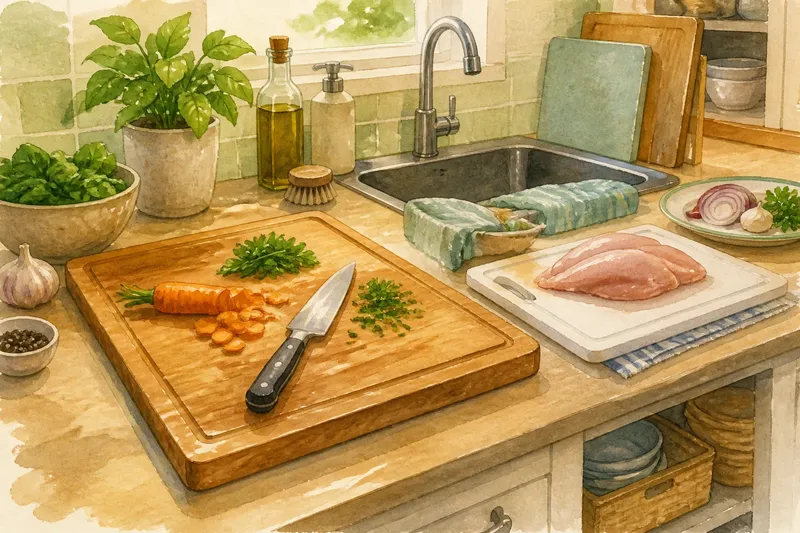
The common mistake with one cutting board or two is deciding by board size alone: a large board can crowd a small counter, while a single board may need cleaning between tasks. Choose by how much working space you have, what you cook and which washing routine you can keep up.
When does one cutting board suit a small kitchen?
Say you rent a flat with a short stretch of counter beside the sink. You usually chop vegetables for soup, slice bread for lunch and occasionally prepare raw chicken. In this invented situation, a single board saves cupboard space and leaves one less item to wash and dry.
The trade-off is timing: before moving from raw ingredients to ready-to-eat food, you may need to pause and clean the board. If that fits your cooking rhythm, one stable board that is easy to lift and wash may be all you need.
When does a second board make sense?
A second board can help if you often switch between tasks and have somewhere to store it. Some households keep one for produce and bread and another for raw meat or fish; others reserve a separate board for messy jobs. Choose a distinction you can remember and use consistently.
Check the space while the board is in use, not just where it will be stored. On a narrow counter, you may need room for a bowl of scraps and a plate of prepared food. A non-slip mat or damp tea towel underneath can help steady the board, as long as it does not get in the way.
How should cleaning affect your choice?
Consider the whole wash-up. A board that fits comfortably in your sink is easier to rinse and scrub than one that must be tilted awkwardly. A second board may simplify the cooking sequence, but it adds another surface to wash and dry.
Wood boards generally need gentler care and thorough drying; plastic boards may be dishwasher-suitable if the maker says so. Deep grooves or cracks can be difficult to clean, so consider replacing a damaged board. Follow the manufacturer’s care instructions and local food-safety guidance.
A colour-coded set is not worth the effort if you lack storage or do not want to keep track of several boards. A simple, dependable distinction is more useful than a complicated system.
What should you check before choosing one cutting board or two?
- Counter space: Check whether a board can sit flat without blocking the sink or hob. If not, choose a smaller board or a single-board routine; otherwise, either setup may fit.
- Storage: Check for a cupboard slot or rack where another board can dry and stay accessible. If there is no suitable place, keep one board; if there is, a second remains an option.
- Sink fit: Check whether you can rinse and scrub the board without twisting or balancing it. If not, choose a more manageable size; if it fits comfortably, that size is practical to clean.
- Usual tasks: Check whether you regularly move between raw ingredients and ready-to-eat food. If so, consider separate boards; if not, one board with appropriate cleaning between tasks may suit your routine.
- Wash-up habit: Check whether you prefer cleaning between tasks or washing both boards afterwards. If you would rather clean once during preparation, use one board and wash it between tasks; if you prefer to keep tasks separate, consider two and plan to wash both.
- Board condition: Check for deep grooves, cracks or damage that makes cleaning difficult. If you find these, replace the damaged board; if the surface is intact and stable, continue using it with the maker’s care instructions.
How do the common cutting-board questions change the choice?
Can one cutting board be enough?
Yes, if you clean it appropriately between tasks and keep it in good condition. Consider how often your cooking requires a pause for cleaning and whether that suits your routine.
Is wood or plastic better for a second board?
Neither is right for every kitchen. Compare how each fits your sink and storage, then follow the care instructions for the material you choose.
Should raw meat have its own cutting board?
A dedicated board can make separation easier to remember when you prepare raw meat alongside food that will be eaten without further cooking. If you use one board, clean it thoroughly between tasks and follow local food-safety guidance.
When should you replace a cutting board?
Consider replacing one when deep grooves, cracks or other damage make it difficult to clean. If it remains smooth and stable, follow the maker’s guidance for continued care.
What would a workable setup look like?
Imagine the flat cook starts with a medium board that sits flat on the counter and fits in the sink. They check the cupboard and find room for a slim second board, then reserve it for raw chicken and wash it after use. The resulting setup keeps the everyday work surface clear while providing a separate board for that task; if storing or washing the extra board becomes a nuisance, they can return to one board and clean it between tasks.
For one cutting board or two, let the counter, sink and storage settle the question before buying anything. Pick a board you can clean and put away easily; that practical fit matters more than matching colours or owning a set.